
Acoustic drone tracking
Every dronemakes a sound.
We're building sensors that hear it, and place the drone in 3D.
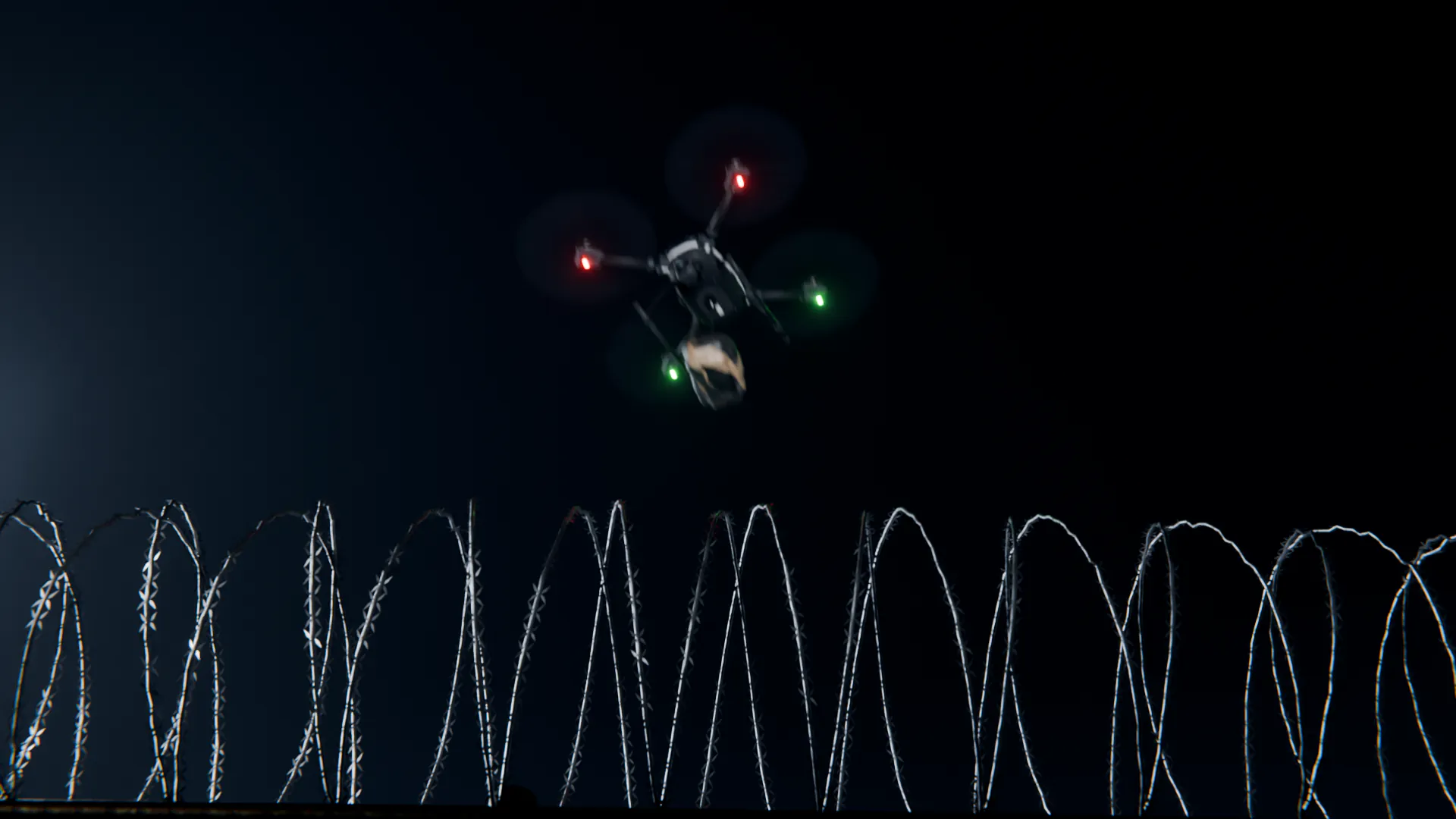
Contraband is arriving by drone.
Federal prisons reported 479 drone incursions and sightings in 2024, up from 23 in 2018.1 In June 2026, federal prosecutors charged 12 people over at least 38 drone drops into 10 federal prisons.2
- FBI and DOJ testimony to the Senate Judiciary Committee (opens in a new tab)
- U.S. Attorney's Office, Middle District of Georgia, June 2026 (opens in a new tab)
How it works.
Listen
Sensors on existing posts pick up propeller noise, day or night.
Locate
Bearings from several posts meet, placing the drone in 3D.
Respond
Your team sees the track and where the drone stopped.
On the posts you already have.
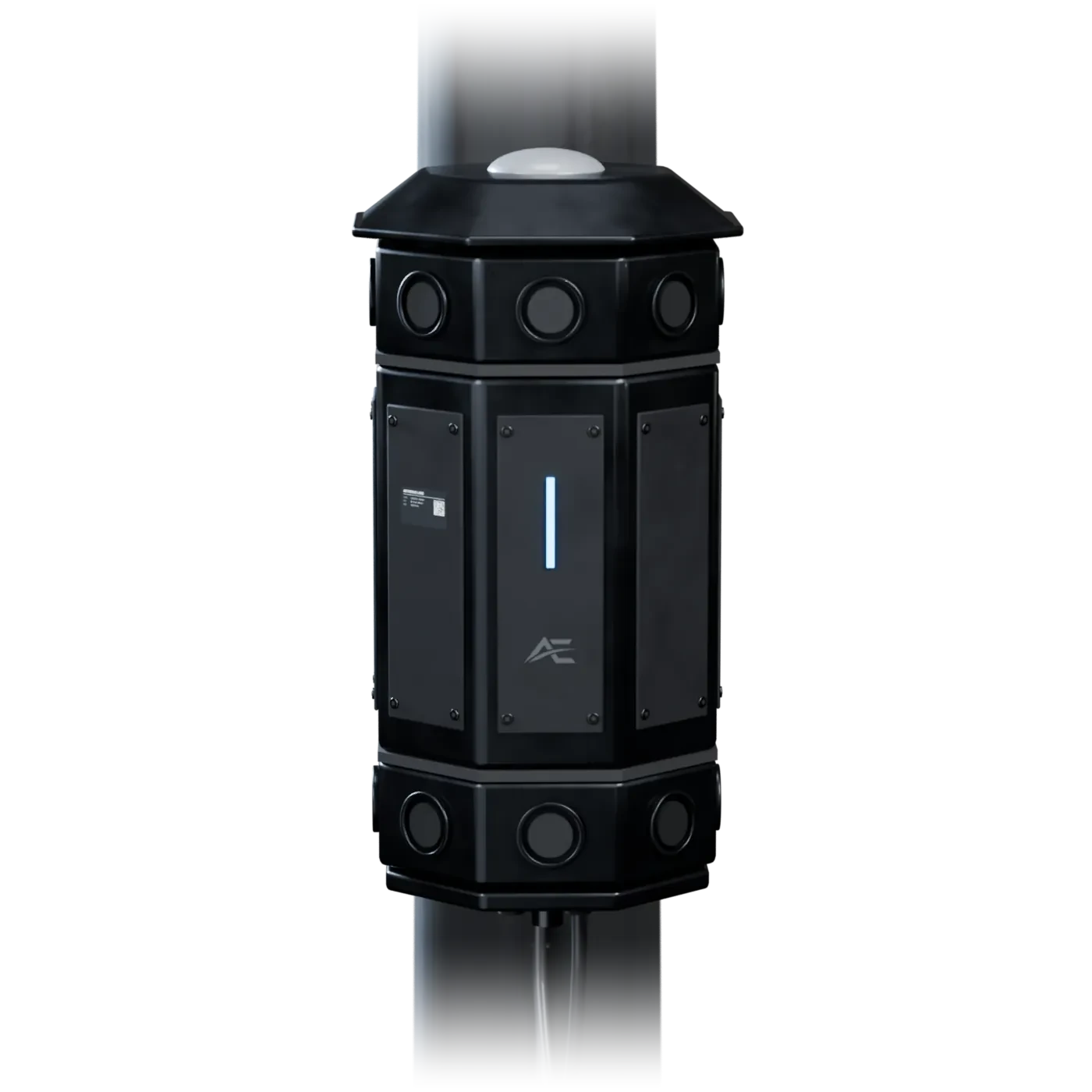
Straps to an existing light pole. No trenching, no new towers.
Strapped to the post
Stainless bands. No new mast.
Microphone rings
Top and bottom, all the way around.
Part of a network
Each post takes a bearing; together they make a track.
Pilots in progress at 3 facilities, with 4 more planned.


Host a pilot.
We install the sensors, run them with your team and share what we learn. Free for the host.