From a sound to a position.
A network of acoustic sensors for the posts you already have, built to place a drone in 3D.
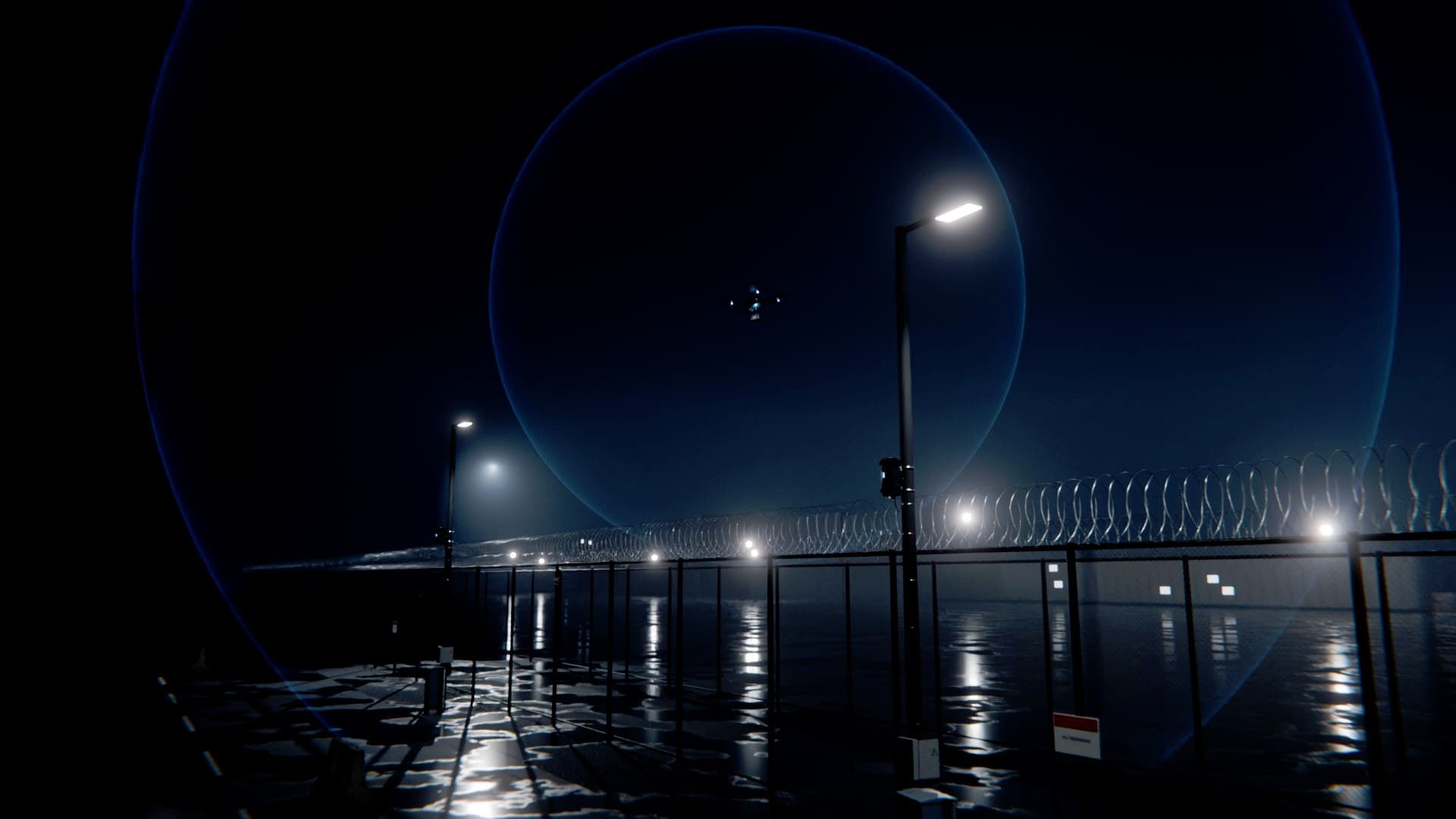
It doesn't need the drone to cooperate.
- Radio
- Can be switched off. A drone flying a programmed route can travel with its radio off.
- Cameras
- Need a clear line of sight. A small drone against a cluttered background is easy to miss.
- Sound
- Needs no radio link. Propeller noise is there whether or not the drone transmits.
Three steps from noise to track.
Listen
Microphones around each sensor pick up propeller noise, day or night.
Take a bearing
Tiny differences in arrival time tell a post which way the sound came from.
Fix the position
Bearings from several posts meet at the drone: one position in 3D, followed as it moves.
What gets installed.
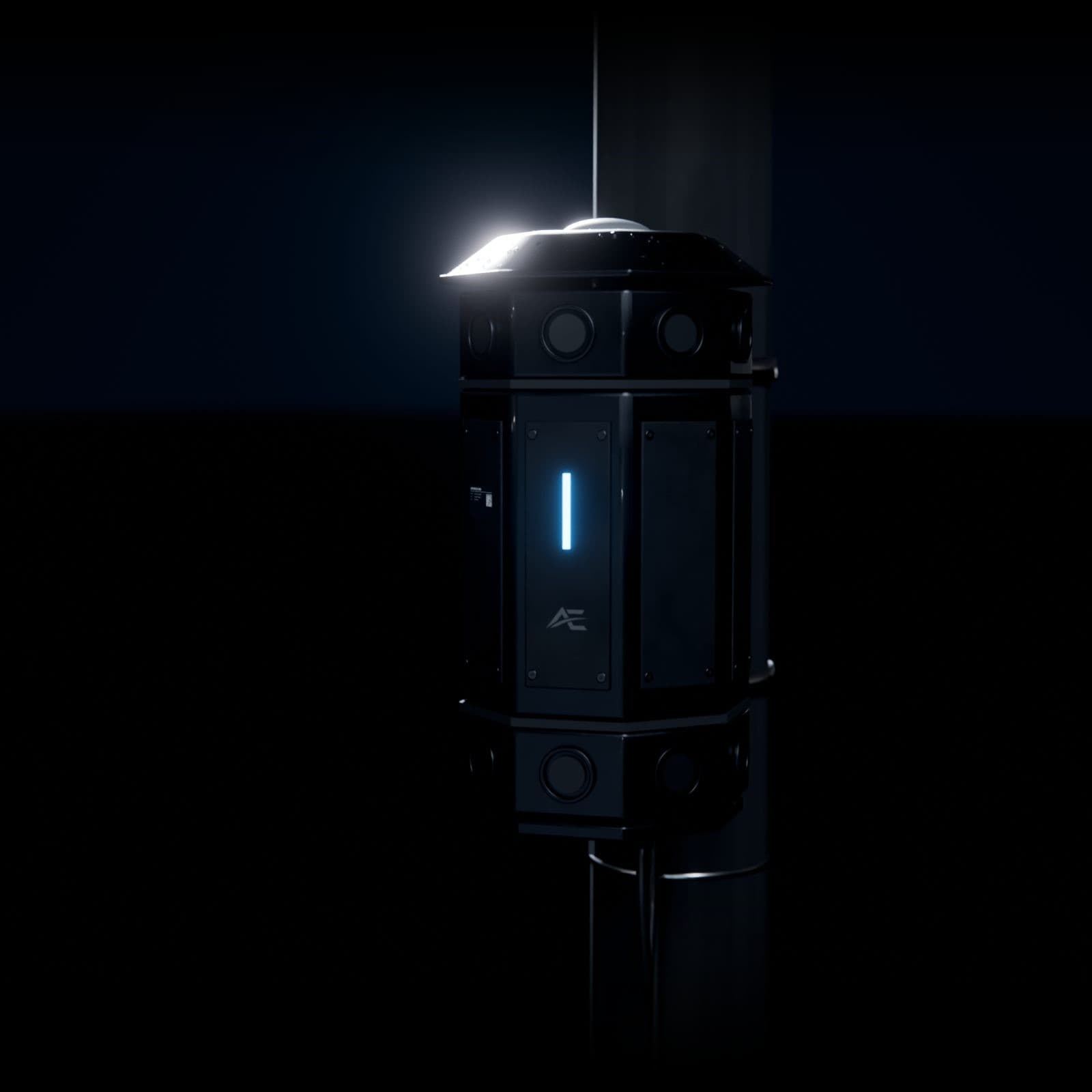
- Sensor package
- Microphones all the way around. Straps to an existing pole.
- Hub
- Fuses every post's bearings into one 3D track per drone.
- Operator view
- Live tracks on a map of the site, with height and where the drone stopped.
Power and network from existing cabling, or solar and wireless where there is none.
See it at your site.
Pilots put sensors on your posts and run them alongside your team. Free for the host.